The acquisition of a 200-ton-per-hour mobile gravel crushing plant represents a substantial capital commitment that extends far beyond the initial purchase invoice. A comprehensive financial analysis must transcend the simplistic evaluation of sticker price, venturing into the complex interplay of operational expenditures, productivity metrics, and residual value that collectively define the total cost of ownership. This machinery is not merely a piece of equipment; it is a production system whose economic viability is measured in cost-per-ton over thousands of operating hours. Failing to account for the full spectrum of long-term financial obligations can transform an apparently profitable gravel crusher plant investment into a persistent financial drain, making a meticulous, forward-looking cost calculation an absolute prerequisite for sound business planning.
Deconstructing the Total Cost of Ownership Framework
To accurately assess the investment, one must adopt a holistic perspective that incorporates every financial facet of the plant’s lifecycle, from commissioning to eventual decommissioning or resale.
The Initial Capital Outlay and Financing Structure
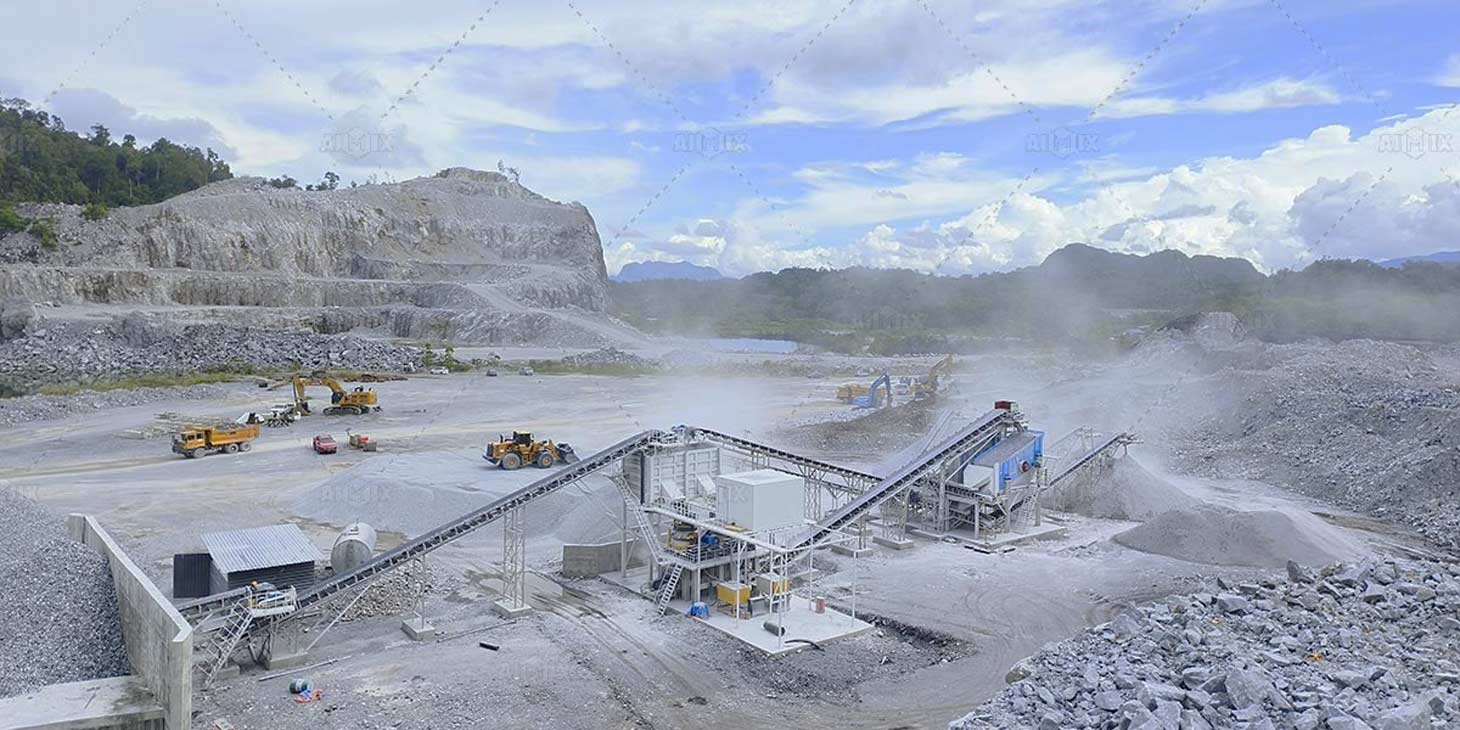
The 200 tph stone crusher plant cost is the most visible, yet often misunderstood, component. This figure encompasses the base machine, but also critical ancillary equipment such as stackers, prescreening modules, and optional dust suppression systems. The method of financing this outlay carries significant long-term implications. An outright purchase requires substantial capital but eliminates interest payments, while leasing or loan arrangements lower the initial barrier but add a cumulative finance charge over the term. The structure of this capital allocation fundamentally impacts the plant’s payback period and must be modeled against projected cash flows from aggregate production.
Operational Expenditures: The Per-Ton Cost Drivers
Once operational, the plant incurs a suite of variable and fixed costs that directly influence the profitability of each ton of material processed. Fuel consumption represents one of the most substantial and volatile ongoing expenses, directly tied to the plant’s operational efficiency and engine technology. Regular maintenance, including lubrication, filter changes, and system inspections, constitutes a predictable but necessary cost to ensure reliability. However, the most significant variable cost is the wear parts consumption. Manganese crusher liners, screen meshes, and conveyor belts are sacrificial components whose replacement frequency and cost are dictated by material abrasiveness and operational intensity. A precise calculation must forecast these wear lifecycles to establish an accurate cost-per-ton metric for maintenance.
The Revenue and Productivity Equation
The expenditure side of the equation is only meaningful when balanced against the plant’s revenue-generating capacity. The 200 TPH specification is not a guarantee, but a theoretical maximum under ideal conditions.
Utilization Rate and Effective Hourly Output
The plant’s financial return is a direct function of its utilization rate. A machine that operates for 1,500 hours annually at 80% of its rated capacity will produce a vastly different revenue stream than one operating for 2,500 hours at 90% capacity. Effective output is diminished by scheduled maintenance, unscheduled repairs, feed bottlenecks, and operational delays. The economic model must therefore be based on a realistic, derated output figure—perhaps 160 to 180 TPH—rather than the theoretical maximum, to avoid revenue overestimation. The difference between theoretical and actual production is where profitability is often lost.
Product Versatility and Market Price Realization
A modern 200 TPH plant is not a single-product machine. Its value is amplified by its ability to produce multiple, spec-grade products simultaneously—from base course and pipe bedding to chippings and manufactured sand. This product versatility allows the operator to respond to market demands and command premium prices for value-added aggregates. The crushing and screening plant configuration directly enables this flexibility. The ability to segregate and stockpile different products maximizes the revenue potential from each ton of raw feed, a critical factor that elevates the plant from a simple volume producer to a strategic asset capable of exploiting niche markets.
Strategic Considerations for Long-Term Viability
The final layer of analysis concerns the plant’s role as a long-term strategic asset, whose value is preserved or diminished by factors beyond daily operation.
Depreciation, Residual Value, and Resale Market
Like all heavy equipment, a mobile stone crusher plant depreciates in value. However, the rate of depreciation is not uniform. Plants from manufacturers with strong brand recognition, proven reliability, and extensive dealer networks typically command higher resale values. The availability of parts and technical support a decade after purchase directly influences the machine’s future marketability. A prudent investment analysis will project a conservative residual value at the end of a five or seven-year ownership period, treating this figure as a crucial offset to the initial capital outlay.
Technological Obsolescence and Regulatory Compliance
The regulatory landscape for emissions and noise is continuously evolving. Investing in a plant with a modern, Tier 4 Final or equivalent engine technology is not merely an environmental consideration; it is a safeguard against future operational restrictions that could render older, non-compliant equipment unusable in certain jurisdictions. Similarly, advancements in automation, fuel efficiency, and safety features represent a form of technological obsolescence risk for older models. A forward-looking cost calculation must consider the plant’s ability to remain compliant and competitive throughout its intended service life, ensuring the investment is protected against premature redundancy due to external regulatory or market shifts.