In the dynamic construction markets of Latin America, from the highlands of Peru to the coastal developments of Colombia, the difference between a profitable project and a logistical nightmare often comes down to one critical decision: selecting the right size for your concrete batching plant. Capacity planning is not merely about calculating maximum output; it is an intricate art that balances project cycles, concrete demand volatility, infrastructure constraints, and financial investment. This article explores how construction firms and entrepreneurs can determine the optimal size for a concrete batching plant(planta dosificadora de hormigón) by analyzing regional project patterns and demand curves, with a specific focus on markets like Peru.
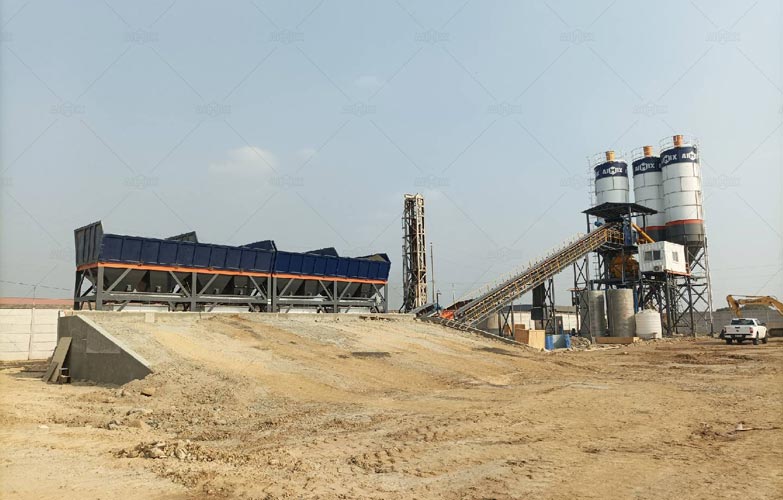
Understanding Latin American Project Cycles
Unlike the steady, year-round construction activity seen in some temperate climates, Latin American construction often follows distinct cycles influenced by weather, economic policies, and agricultural calendars. In Peru, for example, the coastal regions face a dry season ideal for large-scale pours, while the highlands (Sierra) may see project delays during the rainy season from December to March. These cycles directly impact concrete demand, meaning a plant sized for peak months might sit idle during off-peak periods.
The “Temporal” Demand Spike
Infrastructure projects funded by governmental budgets often have strict fiscal deadlines, leading to concentrated demand spikes. A medium-sized contractor might require 50 m³/h for a housing project but suddenly need 80 m³/h to complete a bridge foundation before the rainy season begins. Here, a concrete batching plant must be evaluated not just on its nameplate capacity, but on its ability to handle peak surges without causing truck mixers to queue for hours.
Matching Plant Output to Regional Demand
Determining the optimal size requires a granular look at the specific market. A “one-size-fits-all” approach fails in a region as geographically and economically diverse as Latin America. For a capital city project, a high-capacity twin-shaft plant might be necessary. However, for remote mining projects or smaller urban developments, the equation changes drastically.
Assessing the Need for a Small Concrete Plant
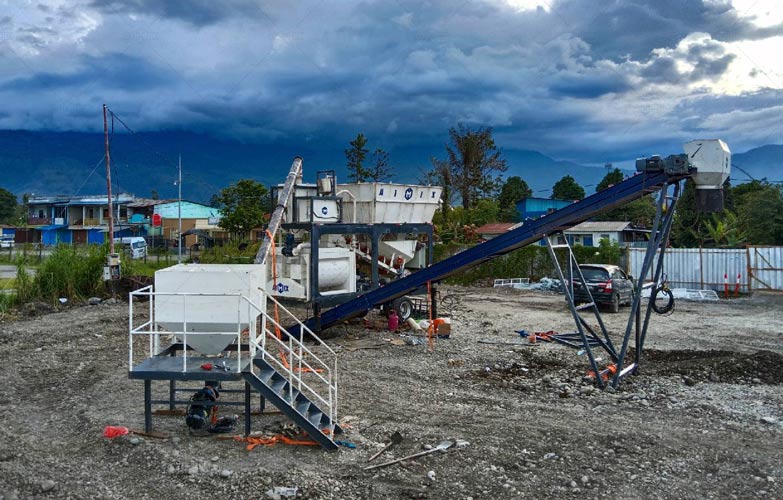
In many secondary cities across Peru and its neighbors, the demand is not for massive continuous pours but for consistent, high-quality concrete for mid-rise buildings and residential slabs. In these scenarios, a small concrete plant(planta de concreto pequeña) with an output of 30-40 m³/h often presents the most attractive business case. The advantages are multiple: lower capital expenditure, easier permitting due to smaller land requirements, and reduced mobilization costs. Furthermore, a smaller plant can be more easily relocated as a city’s development pattern shifts, a common occurrence in rapidly urbanizing areas.
Centralized Mega-Plants vs. Satellite Units
For major infrastructure corridors, a central high-capacity plant (90 m³/h and above) is non-negotiable. However, savvy operators in Peru are increasingly looking at satellite small concrete plant units placed strategically around a city. This reduces the delivery time (a critical factor in hot climates where concrete sets faster) and lowers the concrete plant’s operational footprint in dense urban zones. The decision hinges on the project’s geographic spread versus its vertical density.
Financial Implications: The concrete plant price Factor
The economic reality of the Latin American market means that the concrete plant price is often the single most decisive factor. However, focusing solely on the initial sticker price can lead to long-term pain. A plant that is too large ties up capital in idle equipment and incurs higher maintenance costs. Conversely, a plant that is too small leads to lost sales, customer dissatisfaction, and the need for expensive expansions or subcontracting during peak periods.
Total Cost of Ownership in the Peruvian Market
When analyzing a concrete plant Peru operator might consider, it is vital to look beyond the manufacturer’s quote. Import duties, which can be significant in Latin American countries, logistics for transporting components to high-altitude sites, and the availability of spare parts all contribute to the effective cost. A plant with a higher initial concrete plant price(planta de concreto precio) but robust local support and corrosion-resistant components (essential for coastal humidity) may prove cheaper over a ten-year lifecycle than a cheaper unit requiring frequent imported parts.
Step-by-Step Guide to Sizing Your Plant
To navigate these variables, a methodical approach is required. Here is a practical framework for determining optimal size:
Step 1: Analyze Historical and Forecasted Demand
Collect data on concrete pours in your target region over the last 3-5 years. Look for patterns. In Peru, for example, pay attention to how demand fluctuates with political cycles (election years often see project freezes) and El Niño weather patterns. Calculate the average required monthly volume, but also the standard deviation. A high deviation suggests you need a plant capable of peak shaving.
Step 2: Match Production to Logistics
The best-sized plant in the world fails if the concrete cannot be placed in time. Calculate your maximum viable delivery radius based on local traffic conditions. In Lima, traffic can reduce a 30-minute delivery window to 90 minutes. Your plant’s size must align with the number of truck mixers you can effectively dispatch within that radius. An oversized plant will only create a bottleneck at the truck loading point.
Step 3: Evaluate Scalability and Modularity
Look for a concrete batching plant design that allows for modular expansion. The market for a concrete plant Peru(planta de concreto Perú) might start with a need for 40 m³/h for residential work, but if a nearby mining operation commences, demand could jump to 70 m³/h. Choosing a plant that allows for the addition of a second mixing unit or a larger cement silo without replacing the entire structure is a financially prudent strategy.
Step 4: The Break-Even Analysis
Run the numbers. Calculate how many cubic meters you must sell per month to cover the lease or loan payments on the plant. Compare this to the market demand you identified in Step 1. If your break-even point is higher than 60% of the average monthly demand, the plant is likely too large for the current market cycle, and you should consider a small concrete plant configuration to lower your financial risk.
Conclusion: Balancing Capacity and Agility
The art of capacity planning for concrete production in Latin America lies in the balance between having enough capacity to capture peak demand and maintaining the agility to survive troughs. Whether you are evaluating a high-capacity import or seeking the right concrete plant price for a small concrete plant in Peru, the decision must be rooted in the rhythm of local construction cycles. By prioritizing modularity, understanding total ownership costs, and rigorously analyzing demand volatility, you can size your plant not just for today’s project, but for the unpredictable and opportunity-rich landscape of Latin American development.